|
Requirements to obtain a Texas Commercial Drivers License:
-Take and pass the mandatory Texas CDL license examinations that applies to you.
-Be 21 years old (18 years old if ALL of your driving is within Texas and you do not transport hazardous materials or drive double or triple trailer rigs).
-Possess a valid medical certificate in accordance with MCSR regs. 49 CFR 391.41 - 391.49.
-Certify that you do not hold a driver license from more than one state and certify that your driver license is not currently suspended, revoked, or canceled in ANY state, nor subject to any of these actions.
-Proof of Citizenship, Residence card or Work Permit.
-Pay testing and licensing fees.(Average $70.00)
Step 1 - Consultation & Preparation for the Written Test:
We offer FREE assistance with the Written Tests. We will show you what sections to study in the Texas Commercial Handbook. This process will accelerate your ability to pass! See our sample questions below! Payment in full is due before you get in any of our trucks. So please come see us first so we can start with the registration process.
Step 2 - Taking the Written Tests:
* You need to pass 4 written tests for a Class A License.
*Upon successful completion of Sections 14 and 6, request a Learner's Permit ($11.00).
* The core exams are:General Knowledge, Air Brakes.
* You will be required to Perform an Air Brake Demonstration test and a Pre Trip Inspection--In English Language. Folks, this pre-trip is not easy! Please read chapter 11 of the Texas CDL Handbook. You will need to learn not only the part of the truck, but also its function:
E.X. Radiator--Cools engine, uses anti-freeze, looking for rust, leaks or abrasions to the hoses.
Alternator--Charges batteries at 14 volts. Belt driven(Belt can't have more than 3/4 inch play), securely mounted to engine block.
* The writen tests can be taken at any DPS locations.
Step 3 - Driving on the Road:
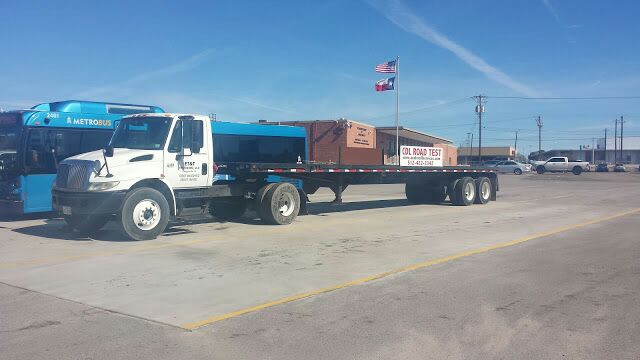
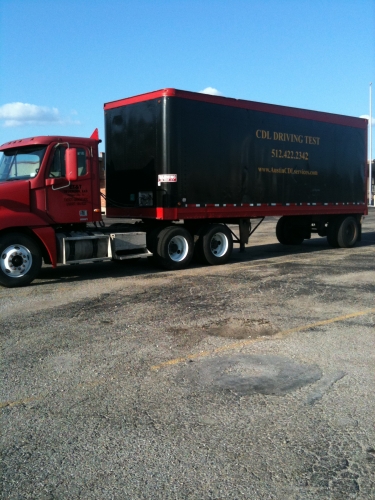
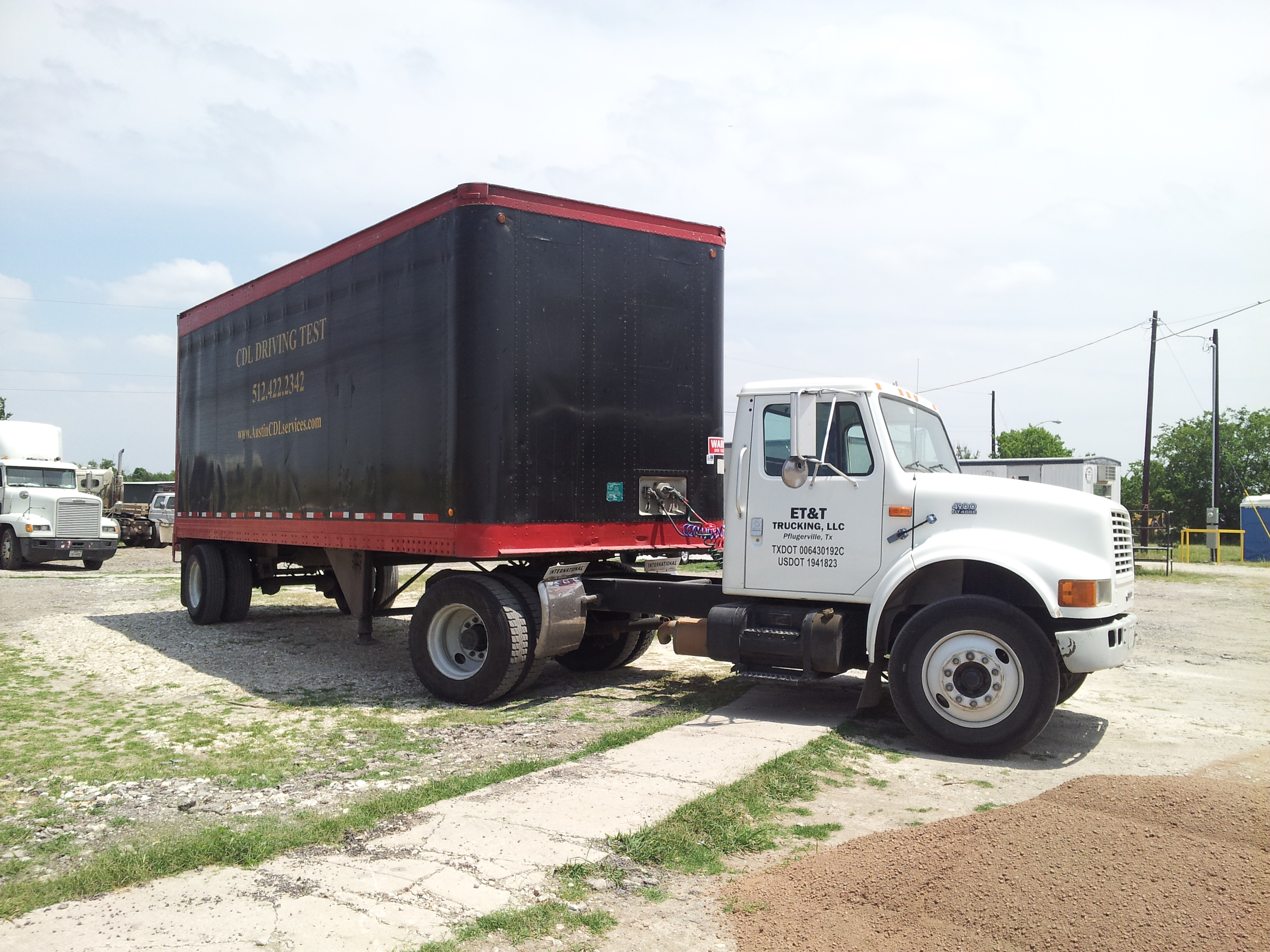
A licensed Class A Driver will be with you at all times while you practice on our rental trucks to provide one on one tutoring. Our automatic trucks help new drivers FOCUS on their driving skill and on the road instead of the gear box. We also have 10 speed standard transmission trucks to fit your individual needs. Most persons average 10 hours before their test. The most challenging part is the backing up and parallel parking. But don't worry, we won't bring you to DPS until you are ready and confident. Should you fail on your first try, we will bring you back at no additional cost to you. We give you 3 chances for passing just as DPS does.
With our trucks, you practice the following:
1. Making safe left and right turns
2. How to avoid clipping curbs
3. Backing up Safely**
4. Parallel Parking** |
5. Driving on Freeway
6. Pre-trip Inspection
7. Air brake Demonstration **
8. Splitting Tractor/Trailer |
Step 4 - Taking the Road Test:
Upon being able to perform the above comfortably, we will accompany you to the DPS Office to take your Road Test. All testing will be done in our vehicles. Your success is our priority!
|